The Ghana property market continues experiencing strong growth as real estate prices rise steadily in major cities like Accra and Kumasi. Increasing demand for residential homes, apartments, commercial properties, and land investments is driving rapid expansion within Ghana’s real estate sector.
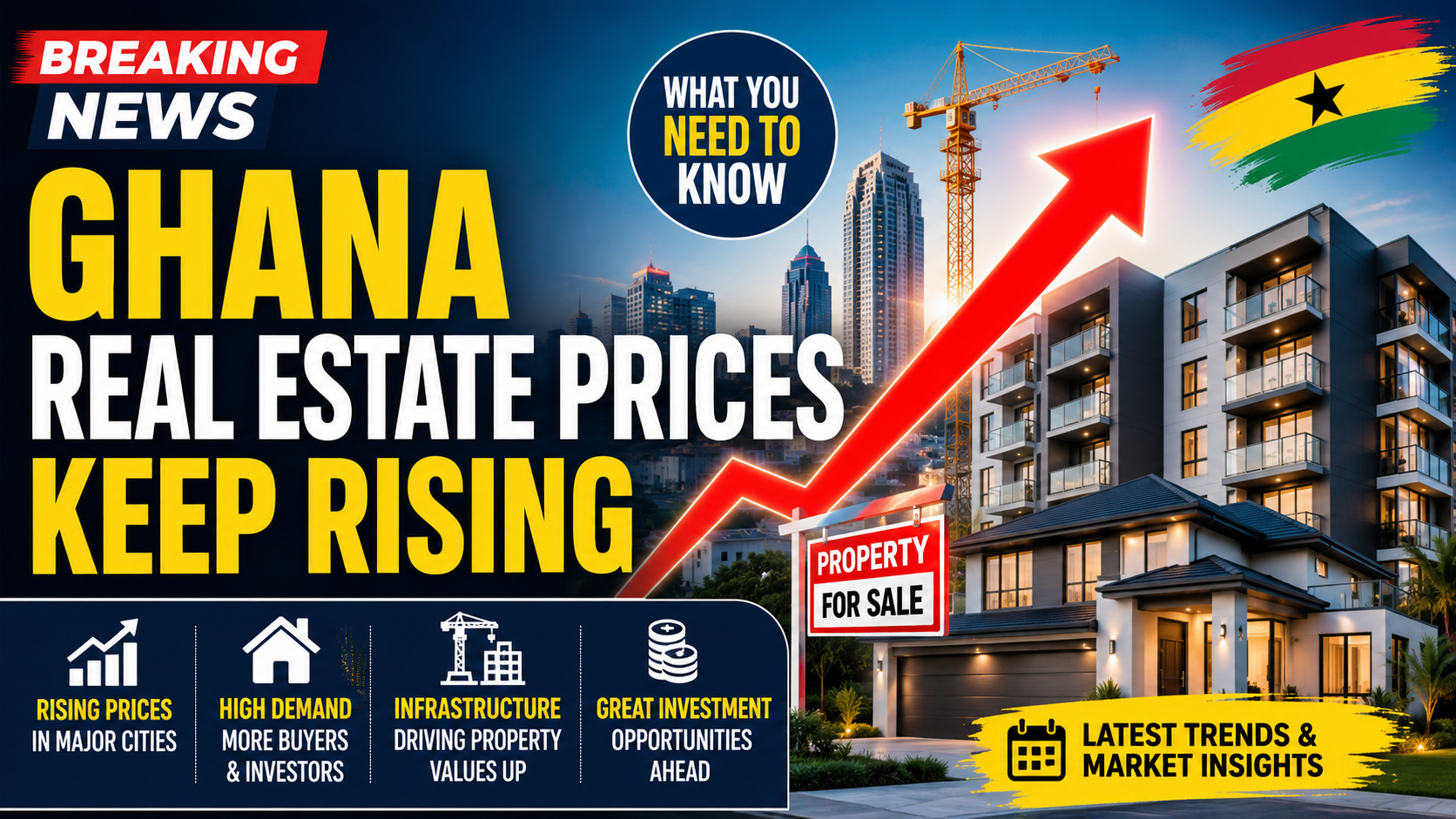
Ghana real estate prices continue increasing as housing demand and property investments grow nationwide.
Property developers, investors, and homebuyers are closely monitoring housing trends as land values and rental prices continue increasing in prime locations. The growing population, urban development, diaspora investment, and demand for modern housing continue making Ghana one of the fastest-growing real estate markets in West Africa.
As competition for property rises, real estate continues becoming one of the most discussed investment sectors in Ghana today.
Why Ghana Real Estate Prices Are Increasing
The topic of Ghana real estate prices continues attracting massive attention as property values rise steadily across major cities like Accra, Kumasi, Tema, Takoradi, and other developing urban areas. The growing demand for homes, apartments, commercial buildings, and land investments continues pushing property prices higher throughout the country.
One major reason Ghana’s real estate prices are increasing is because of rapid urbanisation and population growth. More people are moving into cities in search of employment, business opportunities, education, and improved living conditions. This rising urban population continues increasing demand for housing, rental properties, office spaces, and serviced land in prime locations.
Another important factor affecting Ghana’s real estate prices is the growing interest from property investors and developers. Real estate remains one of the most attractive investment sectors in Ghana because many investors view property as a stable long-term asset. Developers continue constructing gated communities, luxury apartments, and commercial projects to meet the growing housing demand nationwide.
Diaspora investment has also played a major role in the growth of Ghana’s property market. Many Ghanaians living abroad continue purchasing land and homes in cities such as Accra and Kumasi for investment purposes, retirement plans, or family housing. This increasing demand from overseas buyers continues driving property values upward in many areas.
Construction costs have also contributed significantly to rising Ghana real estate prices. The prices of cement, iron rods, roofing sheets, tiles, electrical materials, and labour continue increasing, making property development more expensive. Developers often transfer these additional costs to buyers and renters, leading to higher housing prices nationwide.
The expansion of infrastructure projects has further increased property demand in developing communities. New roads, shopping centres, schools, hospitals, and commercial facilities continue making many areas more attractive for real estate investment. Locations near major infrastructure projects often experience rapid increases in land values and housing demand.
Rental demand continues growing strongly in urban centres because many workers, students, and young professionals prefer renting apartments near business districts and universities. Property owners continue benefiting from strong rental income opportunities in Ghana’s major cities.
Technology and digital property platforms have also improved access to real estate information, making it easier for buyers and investors to search for properties online. Websites such as MeQasa Ghana Property Listings and Lamudi Ghana Property News continue increasing awareness of property opportunities nationwide.
As economic development, urban expansion, and housing demand continue to grow, Ghana’s real estate prices are expected to remain a major topic within the country’s investment and business sectors.
Accra Remains Ghana’s Most Expensive Property Market
The growth of Ghana’s real estate prices continues to be strongly influenced by the property market in Accra, which remains the most expensive and competitive real estate location in the country. Accra continues attracting investors, developers, businesses, and homebuyers because of its position as Ghana’s economic, political, and commercial capital.
Property demand in Accra continues increasing rapidly as more people move into the city for employment opportunities, education, business activities, and modern living conditions. The rising population has created strong demand for apartments, gated communities, office buildings, commercial spaces, and serviced land across many parts of the city. As demand continues growing, property prices in prime locations also continue rising significantly.
Areas such as East Legon, Airport Residential Area, Cantonments, Trasacco, Labone, Ridge, and Roman Ridge remain among the most expensive property locations in Ghana. Luxury apartments, modern townhouses, and upscale gated communities in these areas continue attracting wealthy buyers, expatriates, and investors interested in premium real estate opportunities.
Another major reason Accra remains Ghana’s most expensive property market is because of ongoing infrastructure development and urban expansion. New roads, shopping malls, hotels, office complexes, and modern residential estates continue increasing the value of nearby properties. Investors often target areas experiencing rapid development because property appreciation rates remain strong.
The growth of international businesses and diplomatic activities in Accra has also contributed to increasing Ghana’s real estate prices. Many multinational companies, embassies, and foreign organisations continue establishing offices and residential accommodations within the city. This has increased demand for high-quality rental apartments and commercial properties in strategic locations.
Rental demand in Accra also remains extremely high because many professionals, students, expatriates, and entrepreneurs prefer living close to business centres and urban facilities. Property owners continue benefiting from strong rental income opportunities across different neighbourhoods in the capital city.
Real estate developers continue launching luxury apartment projects and gated community developments to meet the growing housing demand in Accra. Buyers increasingly prefer modern housing with security systems, swimming pools, gyms, backup electricity, and smart home features.
As economic activities and urbanisation continue expanding, many experts believe Accra will remain the leading force driving Ghana’s real estate prices for many years to come.
Real estate news:
MeQasa Ghana Property Listings
Ghana Real Estate Developers Association
Kumasi Real Estate Sector Continues Expanding
The growth of Ghana’s real estate prices is also being driven by the rapid expansion of the property market in Kumasi, which continues attracting investors, developers, and homebuyers from different parts of the country. Kumasi remains one of Ghana’s fastest-growing cities, with increasing demand for residential housing, commercial properties, apartments, and land investments.
Urban development and population growth continue contributing to rising property prices across Kumasi. Many people are relocating to the city for business opportunities, education, employment, and improved living conditions. As demand for accommodation increases, land values and rental prices continue rising in several communities throughout the city.
Areas such as Ahodwo, Asokwa, Santasi, Patasi, Oduom, and Atasomanso continue experiencing strong real estate activity because of their growing infrastructure and strategic locations. Developers are increasingly constructing gated communities, modern apartments, and commercial buildings to meet the growing demand for housing and business spaces in Kumasi.
Another major reason Kumasi’s real estate sector continues expanding is because of ongoing infrastructure projects and urban modernisation. Improved road networks, shopping centres, schools, hospitals, and commercial developments continue making the city more attractive to investors and property buyers. Areas near major infrastructure projects often experience faster increases in property values.
The city’s strong commercial activities also contribute to rising Ghana real estate prices. Kumasi remains an important business hub within the Ashanti Region and continues attracting entrepreneurs, traders, and professionals who require residential and commercial properties. This growing economic activity has strengthened demand for real estate investments across the city.
Rental demand in Kumasi also remains high because of the presence of universities, businesses, and expanding residential communities. Many students, workers, and families continue searching for rental apartments and houses in convenient locations near schools, offices, and commercial centres.
Diaspora investors are also showing increasing interest in Kumasi’s property market because of the city’s long-term growth potential. Many overseas Ghanaians continue purchasing land and homes in Kumasi as part of investment and retirement plans.
Real estate developers continue launching new housing projects in response to the city’s growing population and housing demand. Modern residential estates with improved security, recreational facilities, and reliable infrastructure are becoming increasingly popular among buyers.
As urban expansion and economic growth continue, many experts believe Kumasi will remain one of the key cities driving Ghana’s real estate prices in the coming years.
Housing updates:
Tonaton Ghana Property
MeQasa Ghana Property Listings
Diaspora Investment Boosts Property Demand
Ghana real estate prices continue increasing as housing demand and property investments grow nationwide.
The steady rise of Ghanaian real estate prices continues to be strongly influenced by increasing investment from Ghanaians living abroad. Many members of the diaspora continue purchasing homes, apartments, commercial properties, and land across Ghana as part of long-term investment plans, retirement goals, and family development projects.
Diaspora investors remain highly interested in cities such as Accra, Kumasi, Tema, Takoradi, and rapidly developing areas near the capital because of strong property appreciation and growing urban development. The demand from overseas buyers continues contributing significantly to rising property prices in many prime locations across the country.
One major reason diaspora investment continues boosting property demand is because many overseas Ghanaians view real estate as one of the safest and most profitable investment opportunities in Ghana. Property ownership remains highly valued among families abroad who want to secure assets, build retirement homes, or generate rental income through apartments and commercial buildings.
Modern technology has also made it easier for diaspora buyers to invest in Ghana’s property market. Online property platforms, virtual tours, digital payment systems, and international real estate marketing continue helping overseas investors access property opportunities from different parts of the world. Websites such as MeQasa Ghana Property Listings and other real estate platforms continue attracting international interest in Ghanaian properties.
Another reason diaspora investment continues affecting Ghana’s real estate prices is because developers increasingly design projects specifically for overseas buyers. Luxury apartments, gated communities, smart homes, and serviced residential estates continue becoming more popular among diaspora investors seeking secure and modern housing options.
The growth of Ghana’s economy and infrastructure has also increased confidence among overseas investors. Improved roads, shopping malls, airports, schools, hospitals, and commercial developments continue making many communities more attractive for long-term property investments.
Rental demand in major cities also encourages diaspora investment because many investors purchase apartments and houses for rental income opportunities. High demand for accommodation in urban areas continues creating strong returns for property owners nationwide.
Government agencies and investment organisations continue encouraging diaspora participation in Ghana’s property sector because foreign investment contributes to economic growth, housing development, and infrastructure expansion. The real estate sector continues benefiting significantly from remittances and international property purchases made by Ghanaians abroad.
As overseas interest in Ghana’s housing market continues increasing, many experts believe diaspora investment will remain one of the key factors driving Ghana’s real estate prices in the coming years.
Investment news:
Ghana Investment Promotion Centre
MeQasa Ghana Property Listings
Luxury Apartments Continue Growing in Popularity
The steady increase in Ghana’s real estate prices continues to be influenced by the growing demand for luxury apartments and modern residential developments across major cities such as Accra and Kumasi. More homebuyers and investors are now searching for high-quality housing with modern facilities, strong security, and convenient urban locations.
Luxury apartments continue becoming highly attractive because many residents prefer comfortable living environments that offer modern amenities such as swimming pools, gyms, backup electricity, smart home systems, high-speed internet, CCTV security, and secure parking spaces. Property developers continue responding to this demand by constructing upscale apartment complexes and gated communities across Ghana’s major urban centres.
One major reason luxury apartments continue growing in popularity is because of increasing urbanisation and changing lifestyles. Many professionals, expatriates, business executives, and young entrepreneurs prefer modern apartment living because of convenience, accessibility, and improved living standards. Apartments located near business districts, shopping malls, airports, schools, and entertainment centres often attract strong demand from buyers and renters.
Diaspora investment has also contributed significantly to the growth of luxury housing in Ghana. Many overseas Ghanaians continue investing in premium apartments and gated communities as part of long-term property plans. Developers increasingly market luxury housing projects to diaspora buyers seeking secure and modern homes within prime locations.
Another factor driving the growth of luxury apartments is the increasing demand for rental accommodation among professionals and expatriates. Many investors purchase apartments specifically for rental income because premium properties in strategic locations continue generating strong returns. Short-stay apartment rentals and Airbnb-style accommodation services are also contributing to rising demand for luxury housing.
The expansion of infrastructure and commercial development continues increasing the value of upscale residential areas across Ghana. New roads, shopping centres, office complexes, and recreational facilities continue making certain communities more attractive for luxury real estate investments.
Real estate developers are also competing by introducing more advanced housing designs and smart property technologies. Buyers now expect energy-efficient systems, modern architecture, solar energy options, and improved lifestyle facilities within residential projects.
As urban growth and income levels continue rising, many experts believe luxury apartments will remain one of the strongest drivers behind Ghana’s real estate prices in the coming years. Demand for modern and secure housing is expected to continue increasing across Ghana’s leading cities.
Luxury property updates:
Devtraco Plus
MeQasa Ghana Property Listings
Land Prices Continue Rising Across Ghana
The continued increase in Ghanaian real estate prices is strongly connected to the rapid rise in land prices across different parts of the country. Demand for land continues growing in major cities and developing communities as investors, developers, businesses, and families search for property opportunities in strategic locations nationwide.
Land values continue increasing significantly in areas surrounding Accra, Kumasi, Tema, Kasoa, Prampram, Oyibi, Dodowa, and other fast-growing communities. Investors continue purchasing land in these areas because of ongoing urban expansion, infrastructure development, and future property appreciation opportunities.
One major reason land prices continue rising is because of rapid population growth and increasing housing demand. More people are moving into urban areas for employment, education, and business opportunities, creating higher demand for residential and commercial property development. As available land in prime locations becomes limited, prices continue rising steadily.
Infrastructure projects have also contributed significantly to increasing land values nationwide. New roads, highways, schools, shopping malls, hospitals, and commercial centres continue making many communities more attractive for investment. Areas located near major development projects often experience faster increases in land prices because investors expect future growth and higher returns.
Another reason Ghana real estate prices continue increasing is because many investors now view land as one of the safest long-term investments in the country. Land banking has become increasingly popular among individuals and companies seeking future profits through property appreciation and real estate development.
Diaspora investors also continue purchasing land across Ghana for residential projects, retirement homes, and commercial investments. Many overseas Ghanaians prefer acquiring land in developing communities where future property values are expected to rise significantly.
The growth of gated communities and modern housing estates has further increased demand for serviced plots and strategically located land. Developers continue searching for large parcels of land to support residential and commercial construction projects across the country.
Land prices are also affected by the increasing cost of infrastructure installation, documentation, surveying, and legal processes connected to property development. As operational expenses rise, property owners often increase land prices accordingly.
Despite concerns about affordability, many experts believe land demand will continue growing because Ghana’s urbanisation and economic development remain strong. Investors continue expecting long-term growth within the country’s property sector.
Land investment news:
Lamudi Ghana Property News
MeQasa Ghana Property Listings
Rental Demand Continues Increasing in Major Cities
The steady rise in Ghanaian real estate prices continues to be influenced by increasing rental demand across major cities such as Accra, Kumasi, Tema, and Takoradi. More workers, students, entrepreneurs, expatriates, and families continue searching for rental accommodation in urban areas, creating strong demand for apartments, houses, and commercial properties nationwide.
One major reason rental demand continues growing is because rapid urbanisation is bringing more people into cities for employment, business opportunities, and education. Many individuals relocating to urban centres prefer renting apartments or houses instead of immediately purchasing properties. This has increased competition for available rental accommodation in prime locations across Ghana.
The presence of universities, business districts, hospitals, shopping centres, and industrial zones continues making certain neighbourhoods highly attractive for renters. Areas close to schools, offices, transportation routes, and commercial centres often experience stronger rental demand and rising property values.
Another factor contributing to increasing Ghanaian real estate prices is the growing number of young professionals and entrepreneurs seeking modern apartments with improved facilities and security. Many renters now prefer gated communities, furnished apartments, and residential estates offering features such as backup electricity, internet access, security systems, parking spaces, and recreational facilities.
Expatriates and international workers also continue contributing significantly to rental demand in major cities. Many multinational companies, embassies, and international organisations provide accommodation allowances for employees, increasing demand for premium rental properties within strategic locations.
The growth of short-stay apartment services and Airbnb-style accommodation has also strengthened rental demand in Ghana’s urban centres. Property owners increasingly convert apartments into short-term rentals targeting tourists, business travellers, and visitors seeking flexible accommodation options.
As rental demand continues increasing, property owners and developers continue benefiting from strong rental income opportunities. Many investors now purchase apartments and residential buildings specifically for long-term rental returns and property appreciation.
However, increasing rental prices have also created affordability concerns for some residents, especially within highly developed areas of Accra and Kumasi. The rising cost of accommodation continues becoming a major discussion within Ghana’s housing sector.
Despite these challenges, many experts believe rental demand will continue growing because of ongoing urban expansion, economic activities, and population growth nationwide. The rental market remains one of the strongest drivers behind Ghana’s real estate prices today.
Rental market updates:
MeQasa Rental Listings
Tonaton Ghana Property
Gated Communities Become More Attractive
Ghana real estate prices continue increasing as housing demand and property investments grow nationwide.
The steady growth of Ghana’s real estate prices continues to be influenced by the increasing popularity of gated communities across major cities such as Accra, Kumasi, Tema, and other developing urban areas. More homebuyers and investors are now choosing gated residential estates because of improved security, modern infrastructure, and high-quality living environments.
Gated communities continue attracting strong demand from professionals, business owners, expatriates, diaspora investors, and families seeking safer and more organised residential areas. Many buyers prefer these estates because they often provide 24-hour security, controlled entry systems, CCTV surveillance, backup electricity, recreational facilities, and cleaner surroundings compared to traditional residential neighbourhoods.
One major reason gated communities are becoming more attractive is because urban residents increasingly prioritise security and privacy. As cities continue expanding rapidly, many families prefer living in well-planned residential estates where access is monitored and infrastructure is properly maintained. This growing demand continues to contribute to rising Ghana real estate prices in areas with gated developments.
Modern infrastructure within gated communities also makes them highly desirable for buyers and renters. Many estates include paved roads, reliable water systems, landscaped environments, gyms, swimming pools, playgrounds, shopping areas, and community centres that improve residents’ quality of life.
Real estate developers continue investing heavily in gated community projects because demand remains strong nationwide. Many new housing developments are designed specifically to meet the preferences of middle-income and high-income buyers searching for modern and secure housing options.
Diaspora investors also continue showing strong interest in gated communities because these properties are often easier to maintain and manage remotely. Overseas buyers frequently purchase homes within secured estates for retirement plans, family accommodation, or rental investment opportunities.
Another reason gated communities continue influencing Ghana’s real estate prices is because properties within these estates often experience strong appreciation over time. Buyers view such properties as stable long-term investments due to increasing demand and limited availability in prime locations.
Rental demand within gated communities also remains high because expatriates, professionals, and corporate workers often prefer living in secure and modern residential environments. Property owners continue benefiting from strong rental income opportunities within these estates.
As urbanisation and modern housing demand continue increasing nationwide, many experts believe gated communities will remain one of the fastest-growing segments within Ghana’s real estate market.
Housing developments:
Trasacco Estates
Devtraco Plus
Construction Costs Affect Property Prices
The continuous rise in Ghanaian real estate prices is also being influenced by increasing construction costs across the country. Property developers, contractors, and homeowners continue facing higher expenses for building materials, labour, transportation, and infrastructure development, making real estate projects more expensive than before.
The prices of cement, iron rods, roofing sheets, electrical materials, tiles, paint, plumbing equipment, and finishing materials continue rising steadily within Ghana’s construction sector. These increasing costs directly affect the prices of homes, apartments, office buildings, and commercial properties in major cities such as Accra and Kumasi.
One major reason construction costs continue increasing is because many building materials are imported from outside Ghana. Changes in currency exchange rates, shipping costs, import duties, and global market prices continue affecting the overall cost of property development nationwide. When imported materials become more expensive, developers often increase property prices to recover operational expenses.
Labour costs have also contributed significantly to rising Ghanaian real estate prices. Skilled construction workers, engineers, architects, electricians, plumbers, and artisans continue charging higher fees because of increasing living expenses and growing demand for housing projects across the country.
Transportation and fuel prices also affect the construction industry because building materials must be moved across different regions for property development. Rising fuel costs continue increasing logistics expenses for developers and contractors working on residential and commercial projects nationwide.
Another factor affecting property prices is the increasing cost of land acquisition and infrastructure installation. Developers often spend large amounts on road construction, drainage systems, electricity connections, water supply, and security infrastructure before housing projects are completed. These expenses are usually reflected in final property prices.
Despite the rising costs, demand for housing and commercial property continues growing strongly because of urbanisation, population growth, and increasing real estate investment nationwide. Many developers continue launching new projects because the long-term demand for homes and apartments remains high.
Modern housing trends have also increased construction expenses because buyers now prefer high-quality finishes, smart home systems, backup electricity, security features, and luxury facilities. Developers compete by offering more advanced and comfortable living environments for buyers and renters.
As economic activities and urban expansion continue increasing, many experts believe construction costs will remain one of the key factors influencing Ghana’s real estate prices in the coming years.
Construction updates:
Graphic Business News
Ghana Real Estate Developers Association
Future of Ghana’s Real Estate Market Looks Strong
The future of Ghana’s real estate prices continues looking very strong as urbanisation, population growth, infrastructure development, and investment activities keep expanding across the country. Ghana’s property market remains one of the fastest-growing sectors within the national economy, attracting developers, investors, businesses, and homebuyers from both local and international markets.
Major cities such as Accra, Kumasi, Tema, Takoradi, and rapidly developing suburban areas continue experiencing strong demand for residential homes, apartments, commercial buildings, office spaces, and serviced land. Many experts believe this demand will continue increasing in the coming years as Ghana’s urban population expands further.
One major reason the future of Ghana’s property market looks promising is because housing demand continues exceeding supply in many urban areas. More workers, students, families, entrepreneurs, and expatriates continue searching for accommodation in strategic locations near business centres, schools, transportation networks, and commercial hubs.
Infrastructure projects are also expected to strengthen Ghana’s real estate prices in the future. New roads, highways, shopping malls, hospitals, airports, industrial zones, and modern commercial developments continue increasing the value of surrounding properties. Areas experiencing rapid infrastructure growth often become major investment hotspots for real estate developers and land buyers.
Technology is also transforming Ghana’s real estate industry. Online property platforms, digital marketing, virtual property tours, smart home systems, and electronic payment services continue making property transactions easier for investors and buyers worldwide. This increased accessibility is expected to attract more local and international investors into Ghana’s housing market.
Diaspora investment is likely to remain a major driving force within the property sector. Many overseas Ghanaians continue purchasing homes and land for investment purposes, retirement plans, and family development projects. Real estate continues being viewed as one of the safest and most profitable long-term investments in Ghana.
Another positive sign for the future is the growing popularity of gated communities, luxury apartments, mixed-use developments, and eco-friendly housing projects. Developers continue introducing modern residential concepts that meet the changing lifestyle preferences of buyers and renters nationwide.
Ghana real estate prices continue increasing as housing demand and property investments grow nationwide.
Despite challenges such as rising construction costs and land prices, many industry experts believe Ghana’s real estate sector still has strong long-term growth potential because of increasing economic activity and urban expansion.
As development continues nationwide, many investors remain optimistic that Ghana’s real estate prices will continue rising while creating new opportunities within the country’s housing and investment sectors.
More property news:
Ghana Real Estate Developers Association
MeQasa Ghana Property Listings
Ghana Investment Promotion Centre
Senco Properties News
Ghana Real Estate Developers Association


2 Comments
10 Proven Ghana Real Estate Market Outlook 2026: Property · September 7, 2026 at 10:29 pm
[…] 10 Powerful Ghana Real Estate Prices Rising Fast […]
Houses For Rent In Accra: 2026 Property Rental Guide · September 8, 2026 at 10:34 am
[…] 10 Powerful Ghana Real Estate Prices Rising Fast […]