Ghana is experiencing a significant real estate boom, with property prices rising rapidly in major cities like Accra, Kumasi, and Takoradi. The demand for houses, apartments, and commercial properties has increased sharply due to population growth, urbanisation, and rising investment in the property market.
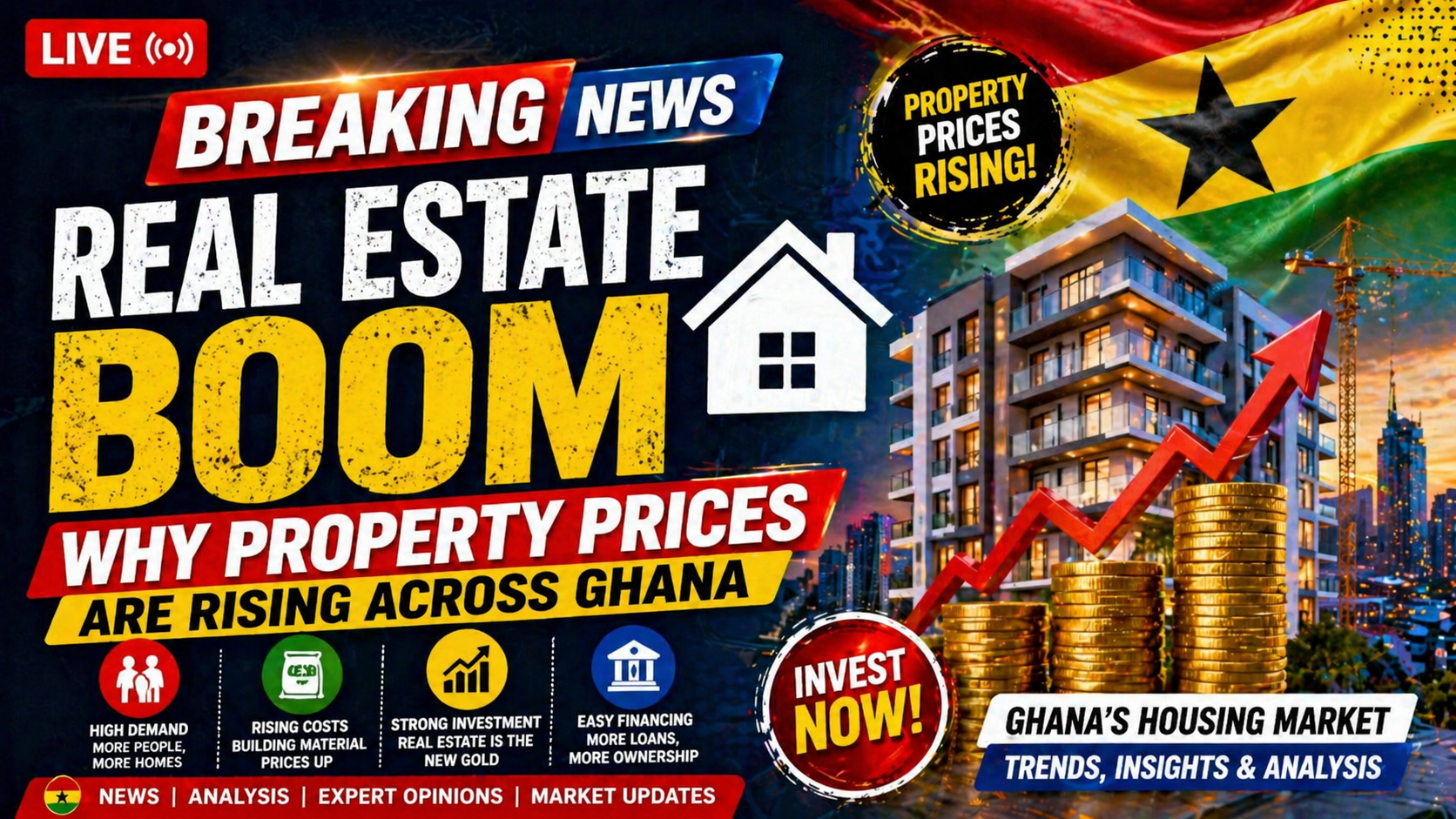
Property prices in Ghana continue to rise due to growing demand, urbanization, and increased real estate investment
As more people seek modern housing and secure investment opportunities, the Ghana real estate sector continues to expand at an unprecedented pace.
Experts from organisations like the Ghana Real Estate Developers Association report that property values are climbing due to limited housing supply, inflation, and increasing construction costs. Investors, landlords, and homebuyers are closely monitoring the market as residential and commercial real estate becomes one of the most profitable investment sectors in Ghana. Understanding the reasons behind this property price surge is essential for buyers, investors, and policymakers navigating the evolving housing market.
According to the Ghana Statistical Service, population growth and urban migration continue to increase housing demand across major cities.
Population Growth Driving Housing Demand
Population growth driving housing demand in Ghana has become one of the most significant factors influencing the country’s rapidly expanding real estate sector. As Ghana’s population continues to increase, especially in urban centres such as Accra, Kumasi, and Tamale, the demand for housing has surged dramatically. This growing population is placing pressure on the housing market, leading to higher property prices, increased rent, and greater competition for available homes.
The focus keyword ‘Population Growth Driving Housing Demand in Ghana’ highlights the direct relationship between population expansion and the rising need for residential and commercial properties. According to demographic data from the Ghana Statistical Service, Ghana’s population has been growing steadily over the past decade, with more people moving to cities in search of employment, education, and improved living standards. This trend, known as rural-to-urban migration, has significantly increased the demand for apartments, houses, and rental properties in major urban areas.
Another key reason why population growth driving housing demand in Ghana is impacting property prices is the limited availability of affordable housing. Many families and young professionals are seeking modern homes close to workplaces, schools, and business centres. However, the supply of housing units has not kept pace with the rapid population growth. As a result, landlords and property developers are increasing prices to reflect the strong demand in the market.
Furthermore, the rise in population has encouraged real estate developers to invest in new residential projects, including gated communities, apartment complexes, and mixed-use developments. These projects are designed to meet the needs of the growing urban population while providing modern amenities such as security, reliable utilities, and convenient access to transportation networks. Government agencies and private developers are also working together to address the housing deficit and support sustainable urban development across Ghana.
In conclusion, population growth driving housing demand in Ghana remains a major force behind the country’s real estate boom. As the population continues to expand and urbanisation accelerates, the demand for housing is expected to remain strong. This trend will likely continue to influence property prices, rental markets, and real estate investment opportunities across Ghana in the coming years.
Urbanisation and City Expansion
Urbanisation and city expansion in Ghana are major factors contributing to the rapid increase in property prices and the overall growth of the real estate sector. As more people move into urban areas in search of employment opportunities, better infrastructure, and improved living standards, cities across Ghana are expanding at an unprecedented rate. Major metropolitan areas such as Accra, Kumasi, and Tema have experienced significant population increases, leading to higher demand for residential and commercial properties.
The focus keyword, Urbanisation and City Expansion in Ghana, reflects the ongoing transformation of Ghana’s urban landscape. New residential communities, shopping centres, office complexes, and transportation networks are being developed to accommodate the growing population. This rapid development has increased the value of land and property in urban areas, especially in prime locations close to business districts, schools, and healthcare facilities.
One of the key drivers behind urbanisation and city expansion in Ghana is the migration of people from rural communities to cities. Many individuals relocate to urban centres to access better job opportunities, education, and modern amenities. This movement has created strong demand for housing, leading developers and investors to build new apartments, gated communities, and commercial buildings to meet the needs of urban residents.
In addition, government infrastructure projects such as road construction, public transportation systems, and utility upgrades have further accelerated urban growth. These developments make cities more attractive to businesses and investors, increasing property demand and pushing prices upward. Areas that were once considered suburban or rural are now becoming fully developed urban neighbourhoods due to improved infrastructure and connectivity.
Another important aspect of urbanisation and city expansion in Ghana is the rise of satellite towns and new residential zones surrounding major cities. Communities located on the outskirts of urban centres are experiencing rapid development as people seek more affordable housing options outside crowded city centres. This expansion continues to reshape Ghana’s real estate market and create new opportunities for property investors and developers.
In summary, urbanisation and city expansion in Ghana remain a powerful force driving the country’s real estate boom. As cities continue to grow and infrastructure improves, the demand for housing and commercial property is expected to remain strong, contributing to rising property values across Ghana.
Rising Construction Costs and Building Materials
Rising Construction Costs and Building Materials in Ghana is one of the most critical factors influencing the steady increase in property prices across the country. Over the past few years, the cost of essential construction materials such as cement, iron rods, roofing sheets, tiles, and electrical components has risen significantly. This trend has made building houses and commercial properties more expensive for developers, contractors, and individual homeowners. As a result, these increased expenses are often passed on to buyers and tenants through higher property prices and rental rates.
The focus keyword: Rising Construction Costs and Building Materials in Ghana reflects the growing financial pressure faced by the construction and real estate sectors. In major cities like Accra, Kumasi, and Takoradi, developers have reported substantial increases in the cost of building materials due to inflation, supply chain disruptions, and currency fluctuations. These economic factors have made it more expensive to import materials and maintain construction projects.
Another major contributor to Rising Construction Costs and Building Materials in Ghana is the increase in transportation and labor costs. Fuel price hikes have raised the cost of transporting materials from manufacturing plants to construction sites, while skilled labor shortages have pushed wages higher in the building industry. These combined expenses have significantly affected the overall cost of construction projects nationwide.
Additionally, fluctuations in the exchange rate have played a major role in increasing construction costs. Many building materials used in Ghana are imported, meaning their prices are directly affected by changes in the value of the Ghanaian cedi against foreign currencies. When the local currency weakens, the cost of imported materials rises, making construction more expensive and ultimately driving up property prices.
Government regulations and quality standards have also influenced Rising Construction Costs and Building Materials in Ghana. Developers must comply with building codes, safety requirements, and environmental standards, which often require the use of higher-quality materials and professional services. While these regulations improve safety and durability, they can also increase project expenses.
In conclusion, Rising Construction Costs and Building Materials in Ghana remains a major driver of the country’s rising property prices. As construction expenses continue to grow due to inflation, labor costs, and currency fluctuations, the real estate market is expected to remain competitive, with property values continuing to rise in both urban and developing areas.
Foreign Investment in Ghana’s Property Market
Property prices in Ghana continue to rise due to growing demand, urbanization, and increased real estate investment
Foreign Investment in Ghana’s Property Market has become a major driver of rising property prices and rapid development in the real estate sector. International investors are increasingly attracted to Ghana because of its political stability, growing economy, and expanding urban infrastructure. High-demand areas such as East Legon, Airport Residential Area, and Tema have experienced significant property value increases due to foreign investment in residential and commercial developments.
The focus keyword: Foreign Investment in Ghana’s Property Market reflects the strong interest from international buyers and real estate companies looking to capitalize on Ghana’s growing housing demand. Many foreign investors purchase apartments, office buildings, and land for development projects, contributing to the expansion of modern housing estates and luxury properties. These investments have boosted the real estate sector but have also increased competition for available properties, leading to higher prices.
Another reason why Foreign Investment in Ghana’s Property Market continues to grow is the rising demand from the Ghanaian diaspora. Many Ghanaians living abroad invest in property back home as a long-term financial asset or retirement plan. This trend has significantly increased property transactions and development projects across major cities.
In summary, Foreign Investment in Ghana’s Property Market remains a key factor shaping the country’s real estate landscape. As international and diaspora investment continues to rise, property values are expected to remain strong, creating opportunities for developers and investors while increasing competition for buyers.
Mortgage Financing and Bank Lending Growth
Mortgage Financing and Bank Lending Growth in Ghana has played an important role in expanding the housing market and increasing property demand across the country. Financial institutions are offering more flexible mortgage options, enabling individuals and families to purchase homes that would otherwise be difficult to afford. Banks such as Ghana Commercial Bank and Ecobank Ghana have introduced home loan products designed to support property ownership and real estate investment.
The focus keyword: Mortgage Financing and Bank Lending Growth in Ghana highlights how improved access to credit has strengthened the real estate sector. With mortgage financing available, more people are able to buy homes, apartments, and land for development. This increased purchasing power has contributed to rising demand for housing and higher property prices in urban areas.
Additionally, the growth of mortgage lending has encouraged property developers to build more housing units to meet the needs of buyers. Government initiatives and partnerships with financial institutions have also helped promote home ownership by providing affordable housing schemes and financing programs.
In conclusion, Mortgage Financing and Bank Lending Growth in Ghana continues to support the expansion of the real estate market. As banks offer more competitive mortgage products and financing options, the demand for housing is expected to increase, further driving property price growth across Ghana.
Limited Housing Supply in Major Cities
Limited Housing Supply in Major Cities in Ghana is another major factor contributing to the steady rise in property prices and rental costs nationwide. In rapidly growing urban centers such as Accra, Kumasi, and Takoradi, the number of available housing units has not kept pace with the increasing population. This shortage has created intense competition among buyers and renters, pushing property prices higher.
The focus keyword: Limited Housing Supply in Major Cities in Ghana reflects the imbalance between housing demand and availability. Many families and young professionals are searching for affordable homes, yet the supply of quality housing remains limited. Developers are working to build new apartments and residential estates, but construction projects often take time to complete, leaving a temporary gap in housing availability.
Another factor contributing to Limited Housing Supply in Major Cities in Ghana is the high cost of land in prime locations. Land prices in central urban areas have risen sharply, making it more expensive for developers to build new housing projects. As a result, many new developments are located on the outskirts of cities, where land is more affordable.
In summary, Limited Housing Supply in Major Cities in Ghana remains a significant driver of rising property prices. Until housing construction increases to match population growth, demand will continue to exceed supply, keeping property values and rental prices on an upward trend across Ghana.
Inflation and Economic Factors
Inflation and Economic Factors Affecting Property Prices in Ghana
Inflation and Economic Factors Affecting Property Prices in Ghana play a major role in the continuous rise of housing and real estate costs across the country. Inflation increases the overall cost of goods and services, including land, construction materials, and labor. As the cost of living rises, property developers and landlords adjust prices to reflect these economic changes. This has led to higher rent, increased property values, and growing investment in real estate as a hedge against inflation.
The focus keyword: Inflation and Economic Factors Affecting Property Prices in Ghana highlights the direct connection between the country’s economic conditions and the housing market. When inflation rises, the purchasing power of consumers decreases, making it more expensive to build or buy property. Cities such as Accra, Kumasi, and Tamale have experienced noticeable increases in property prices due to economic pressures and rising living costs.
Currency fluctuations also contribute to higher property prices, especially because many construction materials are imported. When the Ghanaian cedi weakens against major foreign currencies, the cost of imported goods increases, making construction more expensive. This economic situation directly affects developers and ultimately leads to higher housing prices for buyers and renters.
In conclusion, Inflation and Economic Factors Affecting Property Prices in Ghana remain a significant force shaping the real estate market. As inflation and economic pressures continue to influence construction and living costs, property prices are expected to remain high across Ghana.
Infrastructure Development and New Projects Boosting Property Values
Property prices in Ghana continue to rise due to growing demand, urbanization, and increased real estate investment
Infrastructure Development and New Projects Boosting Property Values is another important factor driving the rise in real estate prices across Ghana. Government investment in roads, transportation networks, water systems, and electricity supply has improved living conditions and increased the attractiveness of many communities. Areas that benefit from new infrastructure often experience rapid growth in property demand and value.
The focus keyword: Infrastructure Development and New Projects Boosting Property Values reflects how improved infrastructure encourages residential and commercial development. Projects such as highway expansions, new schools, and modern healthcare facilities have made developing areas more accessible and desirable for homebuyers and investors. Locations near major road networks or business centers often see significant increases in land and property prices.
Cities like Tema and emerging communities around Kasoa have benefited from infrastructure improvements that have transformed them into major residential and commercial hubs. These developments have created new opportunities for real estate investors and property developers.
In summary, Infrastructure Development and New Projects Boosting Property Values continues to play a key role in shaping Ghana’s real estate market. As more infrastructure projects are completed, property demand is expected to increase, leading to continued growth in housing prices.
Demand for Modern and Luxury Housing
Demand for Modern and Luxury Housing in Ghana has increased significantly in recent years as the middle class and high-income earners seek better living standards and modern amenities. Many homebuyers now prefer properties with advanced features such as security systems, reliable electricity, water supply, and recreational facilities. This growing preference has driven the development of upscale apartments, gated communities, and luxury homes in major urban centers.
The focus keyword: Demand for Modern and Luxury Housing in Ghana reflects changing lifestyle expectations among residents. Professionals, business owners, and expatriates are willing to pay higher prices for comfortable and secure living environments. As a result, property developers are investing heavily in premium housing projects designed to meet these demands.
High-end residential areas such as East Legon and Cantonments have seen rapid growth in luxury property developments. These neighborhoods attract investors and residents who are looking for modern housing options with convenient access to business districts and social amenities.
In conclusion, Demand for Modern and Luxury Housing in Ghana remains a strong driver of property price increases. As more people seek high-quality housing and improved living conditions, the demand for luxury homes is expected to continue rising across the country.
Real Estate as a Profitable Investment
Real Estate as a Profitable Investment in Ghana is widely recognized as one of the safest and most reliable ways to build long-term wealth. Property ownership provides investors with stable income through rent and the potential for capital appreciation over time. As property values continue to rise, more individuals and businesses are turning to real estate as a secure financial investment.
The focus keyword: Real Estate as a Profitable Investment in Ghana highlights the growing confidence in the property market. Investors purchase residential and commercial properties not only for personal use but also as income-generating assets. Rental properties in cities like Accra and Kumasi offer steady returns due to high demand for housing and office space.
Another reason why Real Estate as a Profitable Investment in Ghana continues to grow is the long-term appreciation of land and property values. Unlike many other investments, real estate often increases in value over time, providing financial security for property owners and investors.
Property prices in Ghana continue to rise due to growing demand, urbanization, and increased real estate investment
In summary, Real Estate as a Profitable Investment in Ghana remains a key factor driving the expansion of the housing market. With rising demand, steady rental income, and increasing property values, real estate continues to be one of the most attractive investment opportunities in Ghana’s economy.
Economic policies from the Bank of Ghana also influence inflation and mortgage rates, which directly affect property prices nationwide.
Other stories
-
Youth Employment Programs in Ghana: 8 Powerful Government Initiatives
-
5 Positive Signs Ghana Cedi Recovery Is Strengthening in 2026
-
6 Powerful Business Opportunities in Ghana to Make Big Money in 2026
-
5 Shocking Fuel Price Increases Drivers Must Prepare for in 2026
-
7 Major Road Projects in Ghana Bringing Huge Transportation Benefits



0 Comments